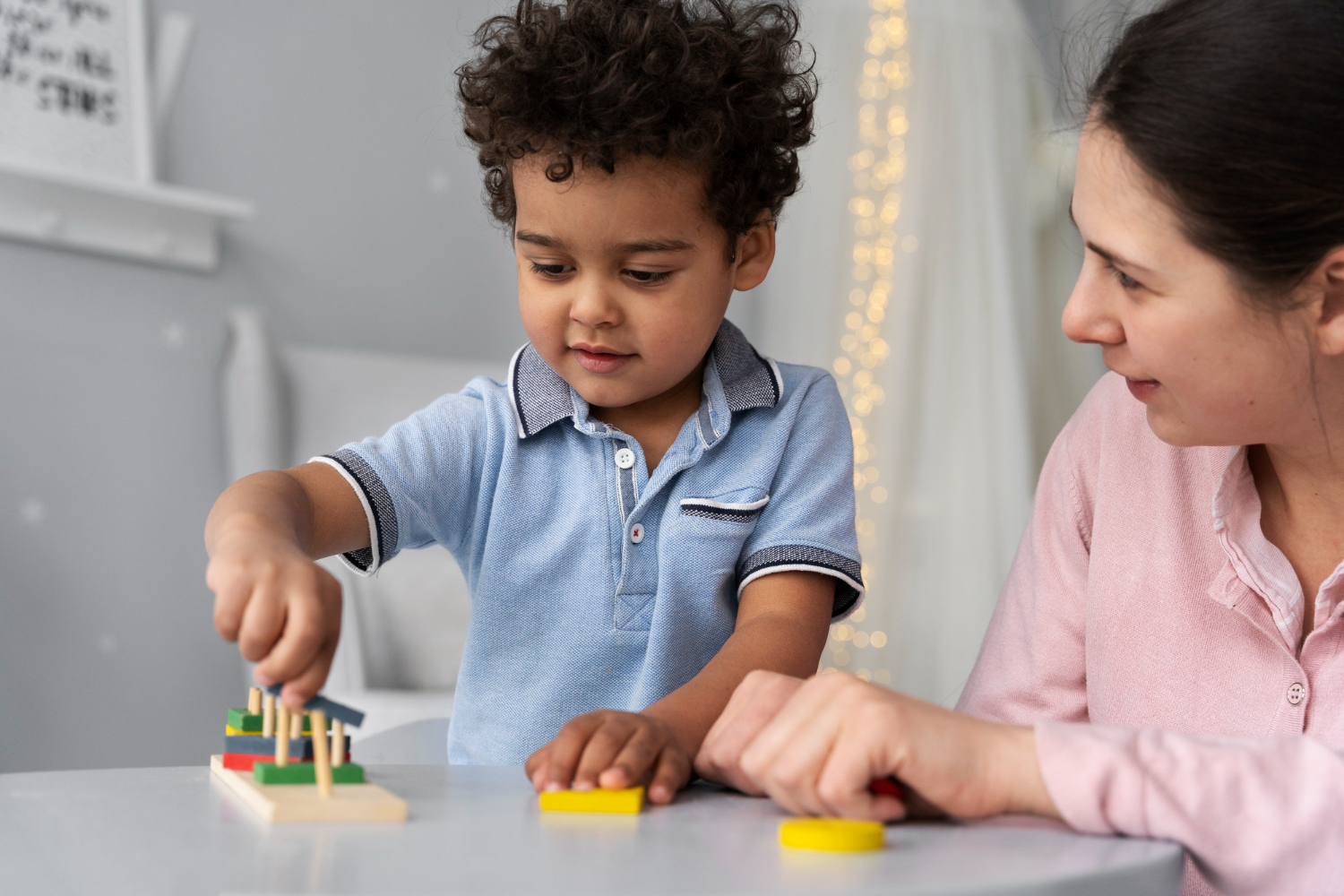
Helping Children Participate in Everyday Life
Everyday activities such as dressing, eating, playing, writing and participating in classroom routines can present challenges for some children. At Heal Child Development Centre, our occupational therapy services support children in developing the skills they need to participate more comfortably and independently in daily life.
Occupational therapy for children focuses on building functional abilities according to each child’s developmental needs, strengths and interests. Through individualised activities and appropriate therapeutic strategies, we aim to support sensory processing, fine motor coordination, self-care, play skills and participation at home, school and in the community.
When Can Occupational Therapy Help?
Paediatric occupational therapy may benefit children who experience difficulties with motor coordination, sensory experiences, everyday routines or age-appropriate functional activities. Parents may consider professional guidance when they notice:
Difficulty holding crayons, pencils or small objects.
Challenges with dressing, feeding or personal care.
Difficulty participating in play or classroom activities.
Sensitivity to certain sounds, textures, movement or other sensory experiences.
Challenges with hand-eye coordination and fine motor skills.
Difficulty managing everyday routines or transitions.
Challenges with handwriting readiness and practical learning activities.
These signs can have different causes and do not automatically indicate a developmental condition. An occupational therapy assessment can help identify the child’s needs and suitable support options.
Our Occupational Therapy Services
1. Sensory Processing Support
Some children experience sensory information differently, which may affect their participation in everyday activities. Occupational therapy may incorporate appropriate sensory-based activities to help children engage more comfortably with their environments and daily routines.
2. Fine Motor Development
Fine motor skills involve using the hands and fingers for precise movements. Activities may focus on grasping, manipulating objects, using classroom materials and developing hand control for everyday tasks.
3. Handwriting Readiness
Children may receive support with pre-writing movements, pencil grasp, hand strength, visual-motor coordination and other foundational skills that contribute to participation in writing activities.
4. Self-Care and Daily Living Skills
Occupational therapy may help children practise dressing, feeding, grooming and other personal care activities. Support is adapted to each child’s abilities, helping them gradually participate more actively in daily routines.
5. Play and Classroom Participation
Play provides opportunities for exploration, learning and interaction. Therapeutic activities may support coordination, task engagement, following routines, using learning materials and participating in suitable classroom activities.
6. Coordination and Functional Skills
Children may practise activities involving hand-eye coordination, bilateral hand use, body awareness and practical problem-solving. These skills can support participation in play, learning and everyday tasks.
Our Individualised Occupational Therapy Approach
At Heal Child Development Centre, occupational therapy begins with understanding the child’s functional abilities, developmental history, daily routines and areas of difficulty. A qualified occupational therapist may assess relevant skills and discuss priorities with the family.
Based on the assessment, individualised goals are developed around meaningful everyday activities. Sessions may include play-based tasks, movement activities, fine motor exercises and practical skill-building opportunities. Progress is reviewed periodically, and activities are adapted to the child’s changing needs.
Partnering With Parents and Caregivers
Family participation is an important part of occupational therapy. Parents may receive practical suggestions for encouraging self-care, play, coordination and independence at home. Collaboration with educators and other professionals, where appropriate, can also support participation across different environments.
Support Your Child’s Everyday Independence
If your child experiences challenges with sensory processing, fine motor skills, self-care or everyday participation, Heal Child Development Centre can help you explore suitable occupational therapy options.